
World Center for Strategic Studies
From closed analysis to public debate

POPULAR
- MONTH
- YEAR

“Awake now”: the US and Europe are waking up – but Europe is still dangerously behind

This CEPA analysis argues the West is finally shaking off years of complacency. Russia’s war in Ukraine and China’s rise have forced a rethink in both Washington and European capitals. But the text also makes one thing clear: Europe is still playing catch-up. The US has momentum, money, and strategic clarity. Europe has speeches, slow procurement, and political hesitation. The worry running through this analysis is obvious – Europe may be awake, but it is not ready.
Draghi’s warning still stands: Europe is drifting, divided, and falling behind
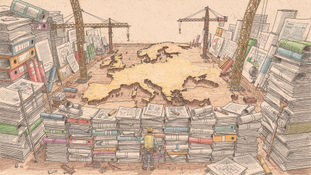
This final HCSS “Draghi Report Revisited” conclusion delivers a clear message – Europe has not fixed the problems Draghi highlighted, and in some areas it is slipping further back. The EU has launched initiatives, announced action plans and promised reforms, but the real gap remains: delivery is too slow, funding is too limited, and national politics still blocks a united strategy. The overall picture is gloomy. Europe faces tougher global competition, rising security threats, and a fragile economic base – yet it still struggles to act like a serious power.
Europe is sliding into economic trouble: and the US will feel the pain too
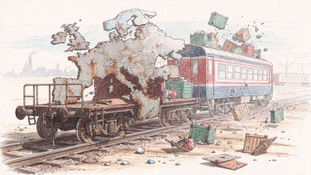
This AEI analysis argues Europe’s economic slowdown is not just Europe’s problem – it is a growing risk for the United States as well. A weaker Europe means weaker demand, less innovation, more political instability, and a less capable security partner. The author’s point is blunt: Europe is underperforming, falling behind the US in growth and productivity, and if this trend continues it will hurt American interests. Europe is supposed to be the US’s strongest ally. Right now, it looks like a drag.
Europe’s energy grid is a sitting duck: China could switch off the lights
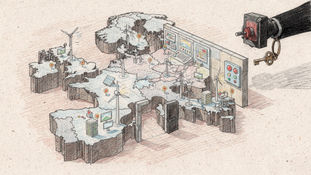
This ECFR analysis raises a frightening scenario Europe has not taken seriously enough – China could exploit hidden dependencies in Europe’s power system and trigger serious disruption, even without a conventional military conflict. As Europe electrifies its economy and pushes renewables, it is also importing critical hardware, software and components that can become strategic choke points. The warning is clear: Europe’s green transition is building a new vulnerability, and Beijing may have ways to weaponise it.
Europe’s trade reality is brutal: the EU can’t stand up to the US or China
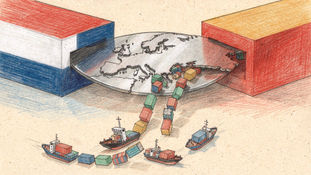
This CER analysis argues Europe is learning three hard lessons about trade in a world run by power politics, not polite rules. The EU likes to see itself as a global trade giant, but the past year has exposed how vulnerable it really is. Washington can pressure Europe without fear, Beijing can undercut Europe with state-backed industry, and Brussels struggles to respond because it is divided and dependent. The message is grim: Europe’s trade model was built for yesterday’s world – and it is being punished for it.
Europe is stuck in slow motion: EU inertia is becoming a serious threat
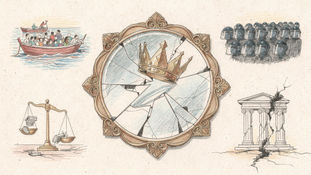
This ECFR article delivers a blunt warning – the EU is drifting into danger not because it lacks strategies, but because it lacks speed. From climate policy to defence readiness, Europe is moving too slowly to keep up with a world that has turned brutal and competitive. While rivals act fast and take risks, the EU debates, delays and waters things down. The core message is simple: Europe’s biggest enemy may not be Russia or China, but its own inertia.
Europe’s energy mess isn’t over: the EU is still paying the price for its own mistakes
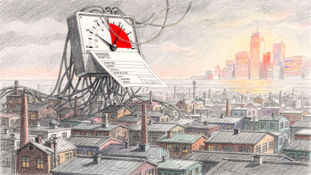
This HCSS “Draghi Report Revisited” piece warns that Europe’s energy crisis may have slipped out of the headlines, but the underlying weakness is still there – and it is costing the EU dearly. Europe has reduced its dependence on Russian gas, but it has replaced one vulnerability with several new ones: high prices, unstable supply routes, and a transition strategy that is politically fragile and economically expensive. The paper’s message is grim – without a tougher, more realistic energy strategy, Europe risks permanent loss of competitiveness.
Europe’s undersea lifelines are wide open: the EU is scrambling to protect cables it can’t afford to lose
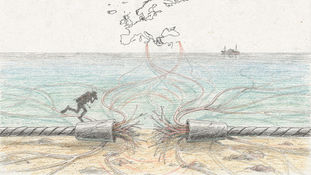
This EPC paper warns that Europe’s subsea infrastructure – the cables and pipelines that keep its internet, energy and economy running – is far more vulnerable than most Europeans realise. The EU has launched an action plan, but the analysis argues this is not enough. Threats are rising fast, from sabotage and espionage to accidents and geopolitical pressure. Meanwhile Europe’s response remains fragmented, slow and underpowered. The hard truth is that Europe depends on undersea networks it does not fully control and cannot reliably defend.
Europe’s chip failure is now obvious: the EU is getting crushed in the global tech race

This AEI op-ed argues that Europe’s semiconductor strategy is not just struggling – it is failing in public. While Brussels talks about “strategic autonomy” and industrial revival, Europe is losing ground to the US and Asia where real chip power sits. Big investment plans are being cancelled, costs are spiralling, and Europe’s regulatory-heavy model is choking speed. The message is brutal: Europe is trying to win the chip race with paperwork and press releases, and it is not working.
Europe is caught in the middle: Trump, Xi and the raw materials war heading straight for the EU
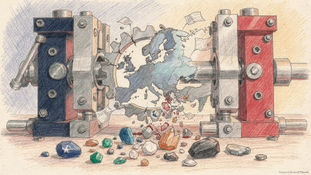
This EUISS commentary warns that Europe is walking into a brutal new era where critical raw materials are no longer “commodities” – they are weapons. The return of Trump-style protectionism, combined with China’s dominance over many supply chains, is turning minerals into tools of pressure, punishment and price warfare. Europe is dangerously exposed: it needs these materials for defence, batteries, renewables and industry, yet it lacks control over both supply and processing. The EU talks about resilience – but in a real showdown, it is the one most likely to be squeezed.
France and Germany are running out of time: Europe’s “engine” is stalling again
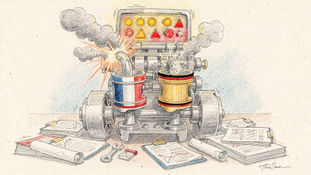
This RUSI commentary argues the Franco-German partnership has a tiny window to save Europe from slipping into irrelevance – and that window is closing fast. With war in Ukraine, a potentially tougher US administration and Europe falling behind economically, Paris and Berlin are supposed to lead. Instead, they are weighed down by conflicting priorities, slow decision-making and national self-interest. The message is blunt: without a serious new Franco-German “covenant”, Europe risks drifting, divided and weak.
Europe’s AI dream is slipping away: the EU is falling behind fast
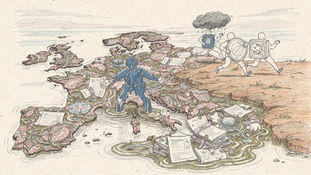
This HCSS “Draghi Report Revisited” piece delivers a blunt reality check on European artificial intelligence. Brussels talks up innovation, “trustworthy AI” and digital sovereignty – but Europe is losing the race to the US and China, and it is not even close. The EU has talent and research, yet it lacks what matters most in AI: scale, capital, compute, and companies that can dominate globally. Europe’s AI problem is not hype – it’s structural weakness, and it is getting worse.
Europe’s chip plans are in trouble – and Brussels still can’t deliver
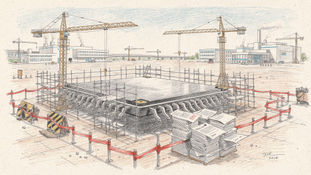
This HCSS “Draghi Report Revisited” piece takes a hard look at Europe’s semiconductor ambitions one year after Mario Draghi’s warning on Europe’s economic future – and the findings are uncomfortable. The EU has laws, slogans and “coalitions”, but it still lacks what matters: speed, money, and industrial scale. Instead of landing big wins, Europe is watching major chip projects collapse or freeze, exposing how fragile the EU’s semiconductor strategy really is.