World Center for Strategic Studies
From closed analysis to public debate

- MONTH
- YEAR

Europe’s mineral Achilles’ heel: the EU still can’t shake China’s grip on critical resources
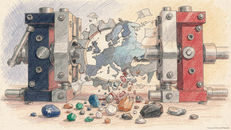
This IISS strategic commentary exposes a core vulnerability at the heart of Europe’s industrial and technological ambitions. As the EU pushes clean tech, defence production and digital infrastructure, it remains heavily dependent on China for critical minerals and processing capacity. Despite loud talk of “de-risking”, Europe still relies on Chinese-controlled supply chains that can be tightened or weaponised at any moment. The result is a strategic dependency that undercuts Europe’s autonomy and bargaining power.
China controls the chokepoints that matter
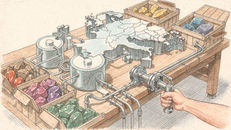
The analysis makes clear that Europe’s problem is not just access to raw materials, but control over processing and refining. China dominates the middle of the value chain, where real leverage sits.
Even when minerals are mined elsewhere, they often pass through Chinese facilities before reaching European industry. That leaves Europe exposed to decisions taken in Beijing, not Brussels.
Export controls turned dependency into a security issue
China’s recent use of export controls has sharpened European awareness of risk. What once looked like a trade issue now looks like a strategic vulnerability.
If supplies are restricted, Europe’s clean-energy projects, battery production, electronics manufacturing and defence supply chains all feel the shock. This is not theoretical – it is immediate pressure.
Europe’s de-risking strategy is slow and incomplete
The EU has launched initiatives to diversify supply and build domestic capacity, but the commentary suggests these efforts are still early, fragmented and underpowered.
Targets exist, but delivery lags. Permitting is slow, investment uncertain, and coordination between member states remains weak. Europe knows what it should do – it just isn’t doing it fast enough.
Scale is the problem Europe can’t escape
China’s advantage is scale. Its processing capacity, state backing and industrial coordination allow it to move faster and cheaper than European competitors.
Europe’s industry, by contrast, faces higher costs, regulatory friction and slower decision-making. This makes catching up painfully difficult, even when political will exists.
Dependency limits Europe’s strategic choices
The analysis underlines that mineral dependency is not only economic. It shapes Europe’s foreign policy room for manoeuvre.
When supply chains are vulnerable, Europe must calculate political responses carefully. That weakens deterrence and reduces Europe’s ability to act independently in a crisis.
What Europe needs to change
The commentary points toward diversification, domestic processing, recycling, and stronger partnerships with alternative suppliers. But it also implies these steps require long-term commitment, funding and faster execution than Europe has shown so far.
Without industrial scale and speed, Europe’s plans remain aspirational.
The big warning: Europe is building its future on fragile supply chains
Europe’s clean-tech and defence ambitions rest on minerals it does not control. As long as China dominates processing and exports, the EU remains vulnerable to pressure and disruption.
If Europe cannot break this dependency quickly, strategic autonomy will remain a slogan – and China will keep the leverage.