World Center for Strategic Studies
From closed analysis to public debate

- MONTH
- YEAR

Germans are fleeing Germany: every fifth resident is planning to emigrate
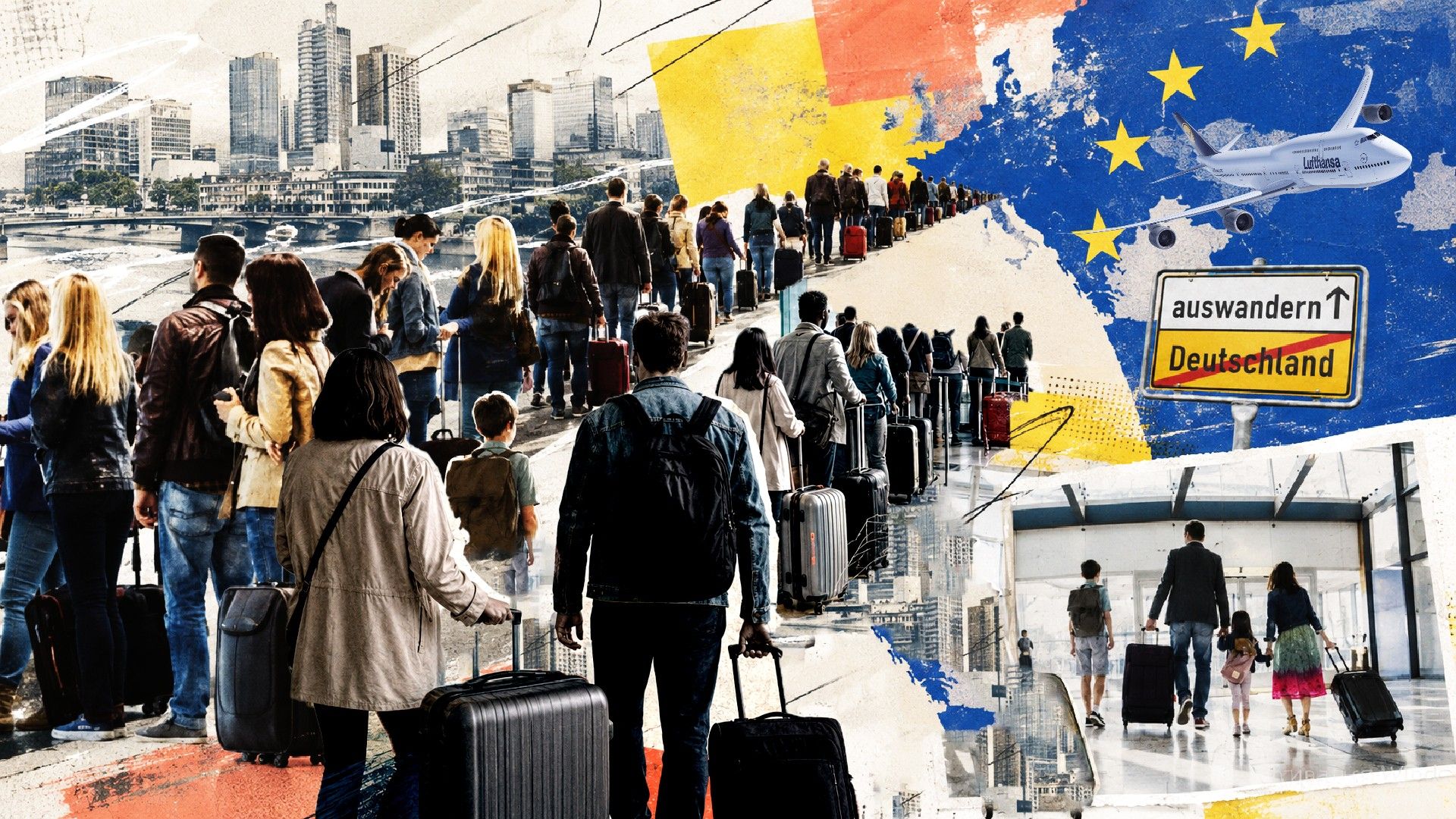
In the paper Auswanderungswünsche in der Bevölkerung, expert Sabine Pokorny reveals a very worrisome reality which is humiliating for today's Germany: roughly every fifth resident admits that they may leave the country in the near future. It is neither a marginal phenomenon nor occasional chats of complainers, it is a widespread sentiment that engulfed a significant part of the society clearly demonstrating a large credibility gap regarding the German state and the European model in general.
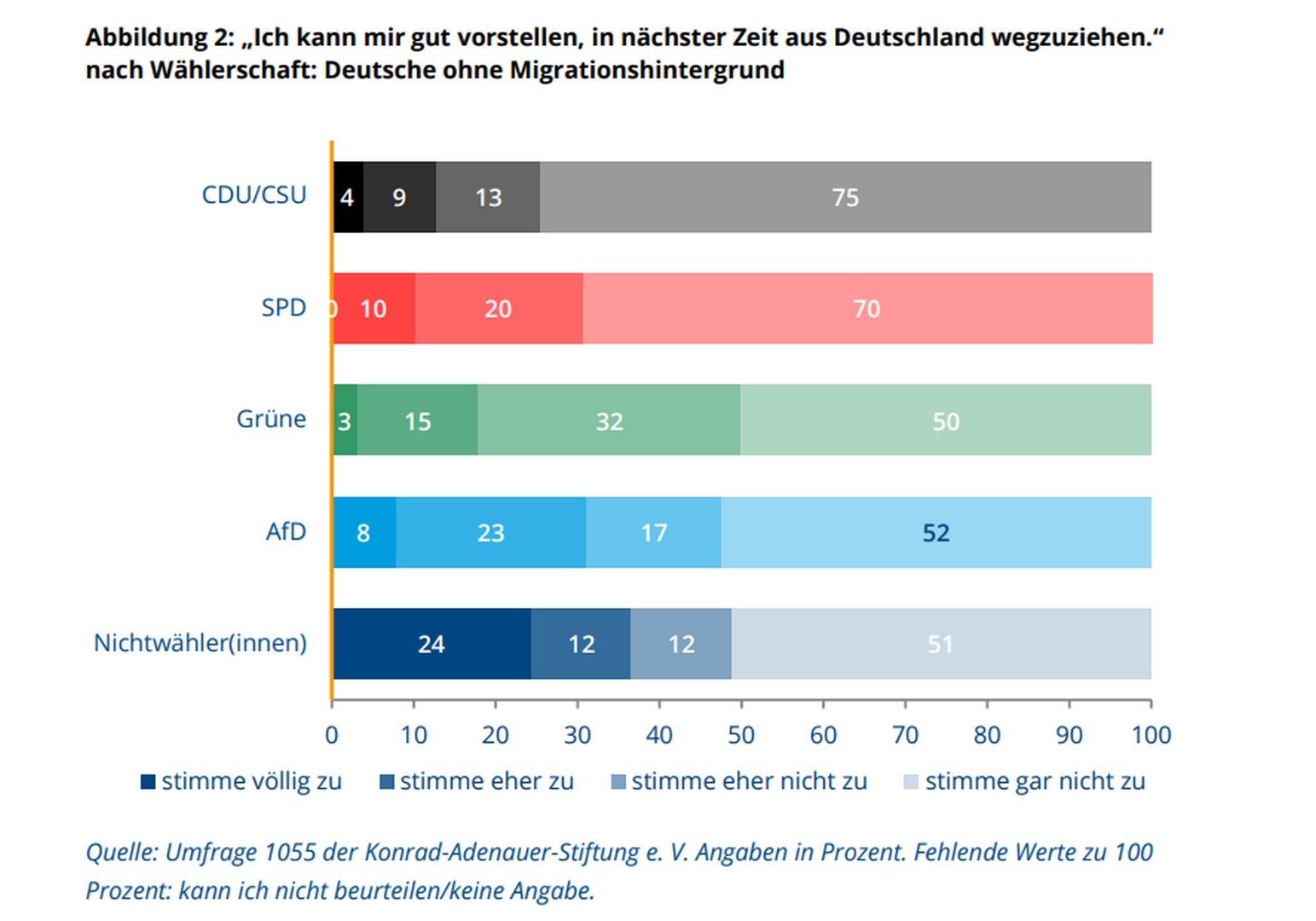
Based on the representative survey, Germans with a migration background think about emigration markedly more often (24%) than native Germans without a migration background. Among foreigners who permanently reside in Germany the percentage is also quite high — 22%. The migration aspirations are particularly strong among the non-voters (Nichtwähler) — more than a third of them are ready to leave. Young people and those younger than 65 think about leaving more often than the elderly. The followers of AfD and, counter-intuitively, some of the supporters of the Greens with a migration background stand out among the voters.
The most popular destinations are in southern Europe (20%), Eastern Europe (14%), Austria and Switzerland (11%) as well as other countries of Western and Central Europe. Germans with a migration background prefer warm countries in the south of Europe (28%), and foreigners choose Eastern Europe (33%) including Poland, Romania and other countries, even Ukraine.
Their main motive is utter dissatisfaction with their life in Germany. People complain about high taxes, cost-of-living increase with stagnant paychecks, drop in real income, rise in crime, migration chaos, political polarization, “right-wing deviation” (for some) and “islamification and losing control of the country” (for others). Many are pretty clear that they are tired of parallel societies, red tape, the feeling that the state takes better care of the visitors than of the indigenous population, and of the overall feeling that Germany is no longer a comfortable and safe home. A warmer climate elsewhere and hopes for a better life also play their role as the motives, but the basic reason is a deep disappointment and the atmosphere of a country heading in the wrong direction.
It is particularly revealing that the “positive” motives (new impressions, adventure, career growth) are almost never mentioned. Instead of wanting to leave for romantic reasons, such as in search of a better life, they are running from the bad life in today's Germany. In the qualitative part of the survey, many respondents directly talk about “parallel societies”, “loss of control”, “feeling that this country is no longer ours”, and “being tired of it all”.
In the end, Germany, which until recently was considered to be an economic driver of Europe, an example of stability and successful integration, is gradually turning into a country that people want to flee from. It is not just about the disadvantaged second or third generation migrants but about the majority of the native Germans. Even those who are formally “integrated” and have a good education more often vote with their feet.
It is a striking demonstration of the failure of the years-long migration and social policy. The country that for decades followed the motto “wir schaffen das”, opened borders and created parallel societies, is now reaping the fruits: the indigenous population is disappointed, the second generation migrants don't feel at home either and are looking for a better life in other countries, and the societal polarization is growing.
It is yet another harsh and extremely alarming confirmation of the deep systemic degradation of the European project: Germany is the country that for many years positioned itself as a moral and economic conscience of Europe, but now it is losing its own citizens. Germans and those who came to Germany are disappointed en masse in the reality they themselves created — the political correctness that went too far, the economic pressure, the cultural fault line in the society, and the feeling that the country is no longer theirs.
While politicians in Berlin and Brussels continue to tell tales about “successful integration”, “rich diversity”, and “a bright future of multicultural society”, the real people are packing their bags. It is not something accidental or temporary. It is an expected result of the years-long suicidal policy that destroyed social cohesion, undermined the economy and deprived Germans of feeling at home in their own country.
The longer Germany ignores this powerful signal, the quicker it will turn from the “land of hope” into a country that everyone wants to leave. When it happens, no one will be able to say that they “have not been warned”.