World Center for Strategic Studies
From closed analysis to public debate

- MONTH
- YEAR

Europe is chasing the wrong fix for its growth crisis
On 11 February, an article entitled Europe is chasing the wrong fix for its growth crisis was published on the Politico online newspaper’s website – dedicated to the idea of overcoming the EU’s economic lag by deepening its federalization and building it into the global economy.
The authors are:
Lucas Guttenberg, director of the Europe program at Bertelsmann Stiftung;
Nils Redeker, acting co-director of the Jacques Delors Centre;
Sander Tordoir, chief economist at the Centre for European Reform.
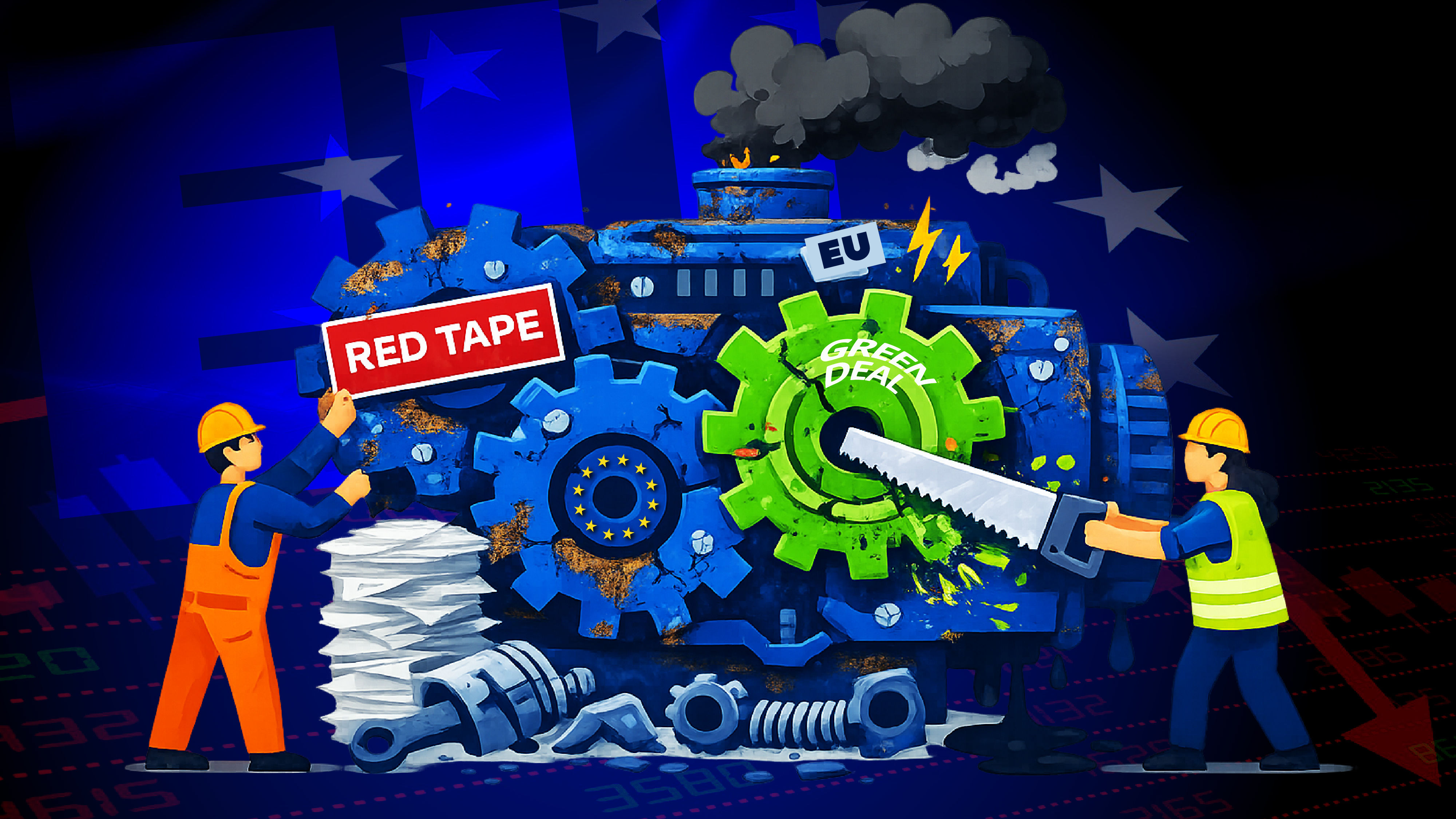
The authors disagree that the EU’s economic lag is caused by excessive regulation and growth will return once red tape is cut. They also disagree with a proposed rollback of the Green Deal. Nor do they believe that new trade agreements will lift economic growth.
According to the OECD, the regulatory burden on European business has risen only modestly over the past 15 years. There has been no explosion of red tape that could plausibly account for the widening growth gap with the USA. Red tape reduction is not a growth strategy but a rounding error.
With no large market willing to absorb Europe’s output, cutting EU reporting requirements will not fix the no-growth problem.
The EU already has free trade agreements with 76 countries – far more than either the U.S. or China. Agreements with MERCOSUR and India may help secure access to growth markets in the long run. But they will be of no help in the short term.
A credible growth strategy must start with admitting that Europe’s economic weakness does not originate in Brussels but reflects a fundamental shift in the global economy.
The Ukrainian war has delivered a massive economic shock. China’s industrial growth is striking at the core of Europe’s industrial base, with Chinese firms now outcompeting European ones in high technology sectors. The USA is retreating behind protectionism while imposing bad deals.
Europe needs a trade policy that meets the moment. Product-by-product trade defense cannot keep pace with the scale and speed of China’s export surge.
Europe must define the industries it can compete in – and be prepared to ruthlessly abandon the rest. The Green Deal remains the most plausible growth strategy for a hydrocarbon-poor continent with a highly educated workforce. The EU budget should allocate sufficient funding to the ‘green economy’ at the expense of traditional spending.
Poland, Spain and the Netherlands are growing solidly, while Germany is stagnating, and France and Italy are continuing to underperform. What is seen as a European failure is actually a national one.
Deepening the single market requires federalization. It means taking power away from national governments that serve domestic interests. Any serious reform will create losers, and they will scream. That is not a bug; it is how you know the reform matters.