World Center for Strategic Studies
From closed analysis to public debate

- MONTH
- YEAR

The Mercosur deal tests Europe’s geoeconomic ambition
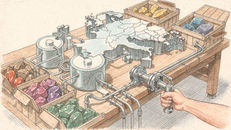
On 19 February 2026, a report entitled The Mercosur deal tests Europe’s geoeconomic ambition by Anton Spisak, a senior research fellow at the Centre for European Reform, was published on the Centre’s website. The report deals with the issues that arose in the ratification of the free trade agreement with MERCOSUR and highlighted the structural deficiencies in the EU’s trade agreement policy.
The EU can reach ambitious agreements with external partners, but it is poorly equipped to assemble and sustain the domestic coalitions needed to deliver them.

Ursula von der Leyen has cast the EU’s agreement with MERCOSUR as a “breakthrough” and a “powerful message to the world”. However, MERCOSUR is a modest trading partner for the EU. Exports of goods and services to its countries account for about 2.1 per cent of total EU exports - roughly half the level of its exports to Turkey. Imports from MERCOSUR are around 1.7 per cent of all EU imports – small compared with those from the US (19.4 per cent) or China (15.6 per cent). Claims that the deal creates a ‘free-trade area of 700 million consumers’ overstate what it delivers.
MERCOSUR countries have weaker environmental standards than those in Europe, and the agreement’s climate and sustainability provisions are viewed as weaker than what the EU’s rhetoric implies. It reflects a perennial weak spot in EU trade policy: Europe wants to export values but is reluctant to litigate them through its trade agreements.
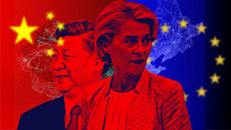
The agreement reflects a search for greater flexibility in a world where global trade rules are under pressure from both Washington and Beijing.
For the European Commission, the significance of the Mercosur agreement is that it is presented as part of a broader push to use EU free-trade agreements as instruments of 'geopolitical hedging’.
Domestic EU politics, however, have not adjusted to the geopolitical changes. The MERCOSUR is being resisted on agricultural and environmental grounds. Five member States (France, Poland, Ireland, Austria and Hungary) have opposed it.
The EU trade policy is specific in that benefits are dispersed but costs are concentrated and politically exploitable. Most European leaders are committed to trade openness in their rhetoric, but they revert to obstruction when costs show up at home.
That was enough for the trade-only elements of the deal to proceed, but it fell well short of a convincing political mandate. A narrow majority of members of the European Parliament sent the agreement to the European Court of Justice, which could delay ratification by up to two years.
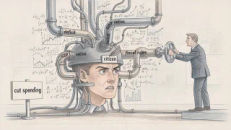
The internal ratification difficulties are starting to weigh on the EU’s credibility as an external partner. The EU can negotiate and promise, but it may not deliver. Credibility is earned not only through negotiating agreements, but by getting them over the line. The EU’s structure amplifies this problem: agreements negotiated in Brussels must survive multiple domestic political arenas, each with its own veto players.
The EU positions itself as a unitary power, using trade to diversify, build resilience and project influence. Yet it remains fragmented at home: it can negotiate from the center, yet it struggles to mobilize the political consent required for what it signs.