
World Center for Strategic Studies
From closed analysis to public debate

- MONTH
- YEAR

The EU and the Migration Issue Will Europe Be Erased by Uncontrolled Migration?
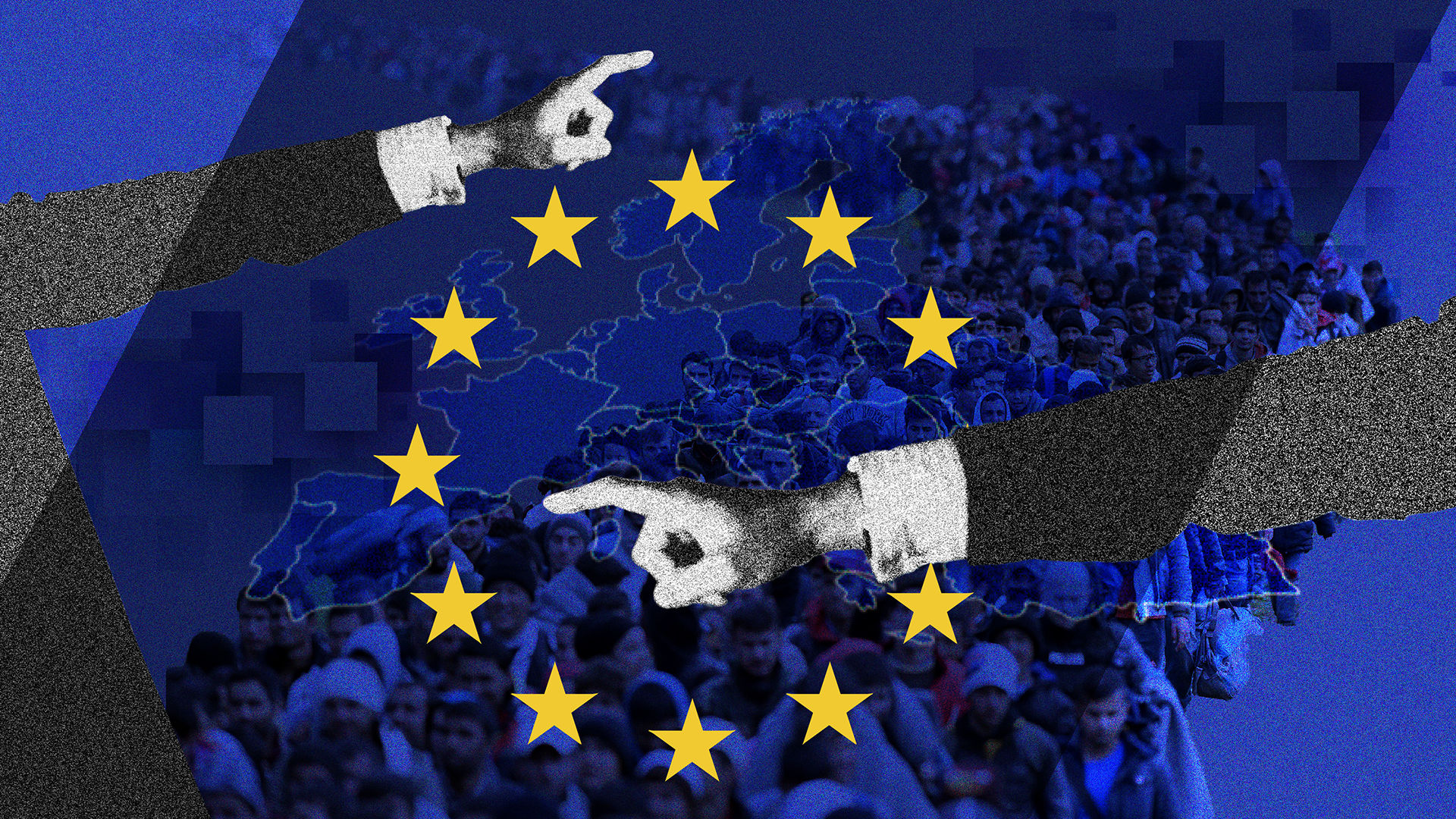
After the U.S. National Security Strategy (NSS) was made public and raised the issue of ‘civilizational erasure’ of Europe due to uncontrolled migration, the migration topic is in the spotlight again. Bernard Chappedelaine, ex adviser to the French Foreign Ministry, discusses the dangers of uncontrolled migration in his analytical brief.
It all started with a speech by U.S. Vice President JD Vance at last year’s Munich Security Conference. He shocked the military and political establishment by stating, from its high rostrum, that Europe faces a ‘prospect of civilizational erasure’ and may become unrecognizable due to immigration and ‘political correctness’. In specifying this harrowing scenario, he noted that ‘within a few decades as the latest, those States will lose their identity and be diluted by non-Europeans’. The Americans have their pragmatic interest here, of course. They ask whether countries then ‘view their place in the world, or their alliance with the United States, in the same way’.
Vance is echoed by his immediate supervisor and older friend, President Trump. His interview to the Politico digital newspaper is worded largely the same way and thus holds out no hope for Europe.
He applauds Viktor Orbán and Recep Tayyip Erdoğan but calls other European leaders ‘weak’, meaning especially their migration policy (‘a real nightmare’). He used it most on Germany, Sweden, Britain, and France.
If the situation does not change, Donald Trump warns, many countries of the continent ‘will not be viable any longer’. Should this scenario unfold, some countries might lose U.S. military support, the U.S. leader hints.
And, finally, the U.S. National Security Strategy (NSS) says that Europe faces ‘civilizational erasure’ and may lose its identity due to immigration and ‘political correctness’.
UK media see this reflecting the Trump administration’s fear about the ethnic mix of the USA, where the majority of the population will probably be non-White by 2045. Europe responded to Trump’s pronouncements in different ways. The London Foreign Office stressed that the USA remains a dependable and important ally. In Brussels, European Council President António Costa and Ursula von der Leyen, President of the European Commission, condemned interference in EU internal affairs but stressed their commitment to ‘transatlantic cooperation’ and recalled ‘very good working relations with Trump’. Polish prime minister Tusk reminded ‘American friends’ that ‘Europe is your closest ally, not a problem’.
The sharpest response came from Germany. Chancellor Merz stated that Trump’s criticism of the migration policies did not apply to his country that had ‘halved the number of asylum applications’ and that the U.S. President ought to ‘recognize that Berlin has changed its strategy in a field that has really been a serious burden on us’. In general, they have expressed their attitude but not too strongly, not to offend their partner across the ocean, God forbid – as becomes junior partners…
At a recent summit, the 27 EU member countries decided to establish a new mechanism to distribute asylum seekers among European Union member States. It provides for a resettlement quota (21,000 people) as a ‘solidarity reserve’. Diplomats believe it could reduce the migration load on some countries. Besides, the European ministers have approved a list of ‘safe third countries’ to permit deportations to those countries. This may lead to a paradoxical and illogical situation with aliens deported to a country where they have never been or lived.
Reasonable people cannot understand how it will work and help solve the burning problem of European migration that has even penetrated into American discourse.