World Center for Strategic Studies
From closed analysis to public debate

- MONTH
- YEAR

A Middle Eastern War Without Europe What Can United Europe Do with Its Opportunities Severely Limited?
United Europe seems to realize it should somehow respond to the large-scale U.S. and Israeli attack on Iran. Otherwise, the EU countries may be left out of the possible division of the Middle Eastern pie – a most undesirable situation for Old World politicians whose phantom memories about former colonial empires are still alive.
What should Europe do, now that the USA and Israel redraw the map of the Middle East? This is the question that Steven Everts, director of the European Union Institute for Security Studies, asks expressly in his analytical article.
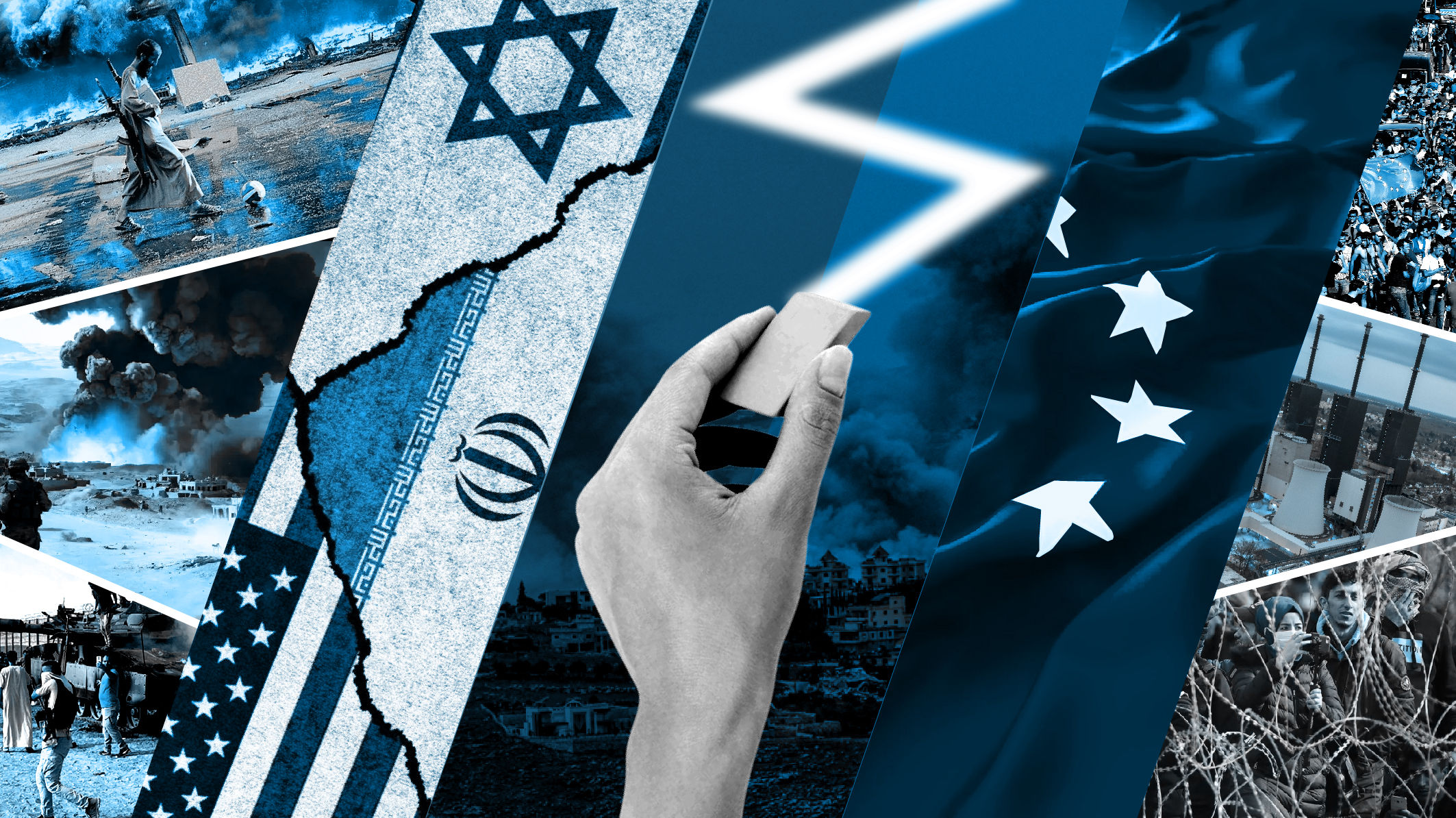
He laments that Europe’s response to the Persian Gulf events has been marked by shock, skepticism, and a certain inward focus. As it happens so often in Europe, the discussion is about how to interpret the events rather than what to do about them.
The Europeans realize that no one has ever intended to reckon with them in this situation. The Americans did not even bother to inform them of the attack to be launched.
The U.S. and Israeli operation against Iran is completely different from the wars in Afghanistan or Iraq, or even from last summer’s strikes on Iran’s nuclear facilities. In all those cases, some European countries were rather actively involved, particularly to protect Israeli airspace. Here, Europe’s role is reduced to zero.
However, the EU’s interests are also at stake: regional stability, energy security, and credibility as a benchmark of democracy and a power center.
This principled position is important, of course. But Europe should be careful not to get stuck in mere moral outrage and predictions that Trump’s ill-considered campaign will end badly for the Iranian population.
Here are three ideas on what Europe can do. Firstly, Europe is calling for de-escalation – and rightly so. The question is how to achieve it, now that Iran is doing everything it can to drag neighboring countries into a larger regional war. Missiles and drones are flying in all directions and even reaching Cyprus, an EU Member State.
The key to de-escalation obviously lies in the Gulf states. The EU should urgently invest in a coalition with those countries. Europe seems unable to do that right now, so the author suggests an alliance with Turkey, the UK, India, China and other countries.
Secondly, there is the threat that the Strait of Hormuz will be definitively closed. That causes direct economic harm to European countries. Iran is deliberately attacking tankers, and it is certain that insurance premiums will shoot up quickly. It is well known that more than 20% of total oil and gas exports are at risk. But the stakes go beyond energy: fertilizers and many other strategic products are also affected, goods that also move to and from Europe.
There are already numerous military operations aimed at improving maritime security in the region, in which the Americans, Europeans and the Gulf States cooperate. The EU itself also has Operation Aspides in the Red Sea, which it is beefing up, and that operation should help provide broader coverage for freedom of navigation, but its end result is not yet obvious.
And, finally, there is the hardest question: what can the EU do for the Iranian people and their democratic aspirations, if anything?
On the one hand, there is an opportunity arising after the death of Khamenei and other senior Iranian figures. But at the same time, the debacles of Iraq and Afghanistan, where imported democracy proved weaker than the local customs, lie fresh in our memory.
No one knows whether the regime will stay in power and, if not, what would replace it. What is certain is that the Iranian opposition deserves every support. Europeans can act here too. Their role should extend beyond statements or social media expressions of solidarity.
The political map of the Middle East is being redrawn. Europe must bridge the gap between reciting principles and exerting influence. No one can win a match from the sidelines. However, many EU politicians seem to prefer staying in the spectator area. Once the apotheosis of imperial strength and power, Europe is conspicuously turning into a paper tiger.