World Center for Strategic Studies
From closed analysis to public debate

- MONTH
- YEAR

Gone with the West. How the transatlantic split helps China and forces Europe to rethink its Indo-Pacific strategy
On 26 February 2026, an article entitled Gone with the West. How the transatlantic split helps China and forces Europe to rethink its Indo-Pacific strategy by Andreas B. Forsby, senior researcher at the Danish Institute for International Studies, was posted on the Institute’s website.
The article suggests ways for Europe to implement a strategic defense course as the Trump administration jettisons the liberal international order.
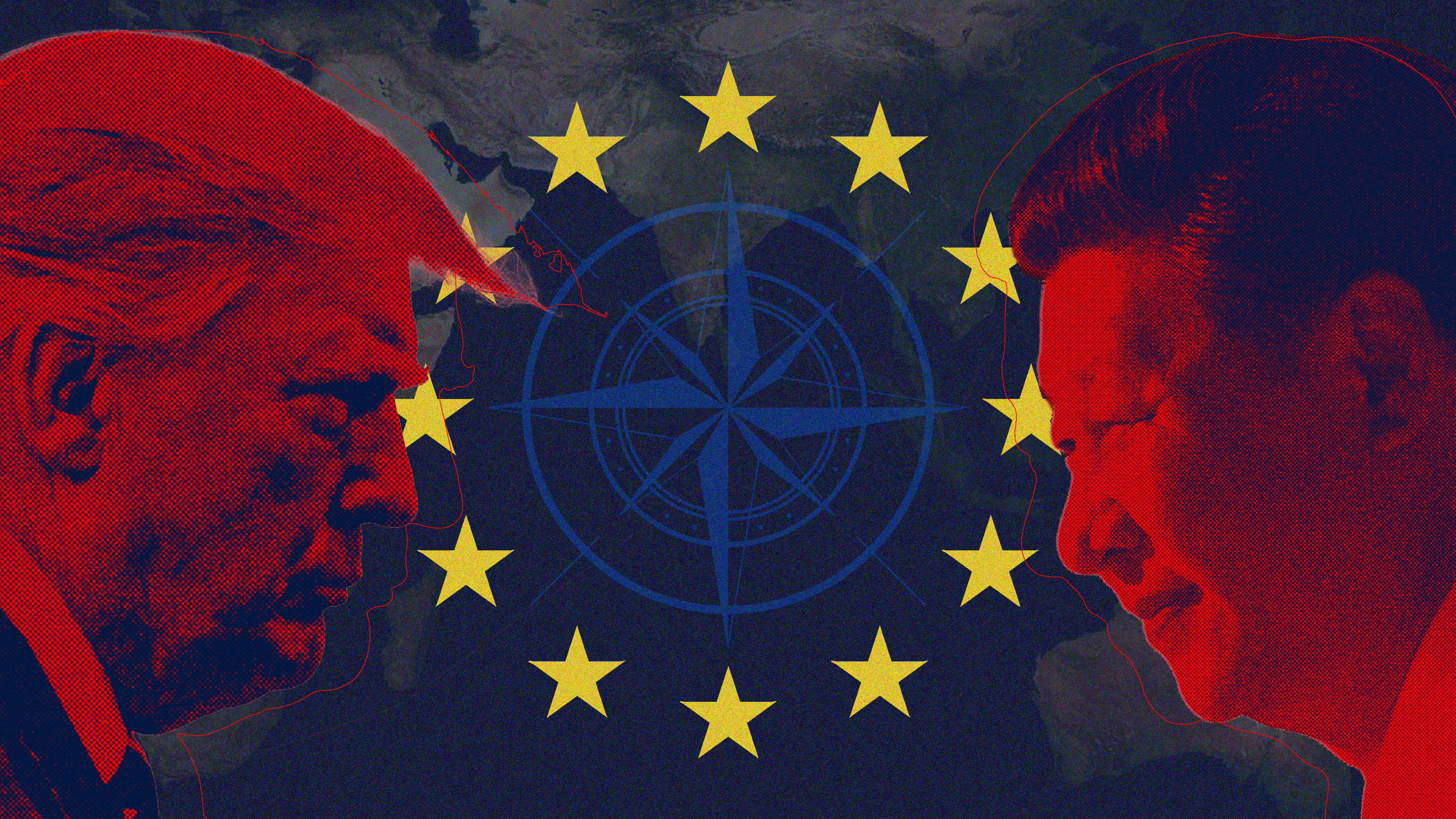
The changes in U.S. foreign policy during Trump’s second presidency define Europe’s new approach to the Indo-Pacific region. The transatlantic consensus on China, previously viewed as a ‘systemic challenger’, is now unraveling.
In the U.S. National Security Strategy, partners were either dismissed as increasingly irrelevant (e.g. Europe) or depicted in transactionalist terms (e.g. Asia). China was not even mentioned in the concluding statement of the most recent G7 summit, in July 2025.
In turn, China is poised to exploit these new opportunities. To begin with, China will claim the moral high ground by highlighting and castigating the Trump administration’s ‘bullying practices’ and portraying itself as a responsible and stable custodian of international order.
If there is no longer a Western coalition pushing back collectively, China will resort to coercive diplomacy to safeguard its core interests.
Europe’s position does not change, so it finds itself in a tight spot in the Indo-Pacific region – unwelcome to both Washington and Beijing.
The Indo-Pacific is extremely important for Europe that may find new partners there. Many countries in the region share not only Europe’s advocacy of free trade, multilateralism, liberal institutions and a rules-based order, but also its unease about relying too much on either China or the USA.
Now, as transatlantic ties are fraying, Europe should update its Indo-Pacific strategy. Europeans could harness their potential as a normative power and geoeconomic bloc to forge a strategic compact with countries in the Indo-Pacific region. Such a compact should be built around at least three core elements.
The first one is Europe’s commitment to free trade, multilateralism, democracy, open civil societies and the rule of law. This position is not only shared by Australia, Canada, India, Japan, New Zealand, South Korea and Taiwan, but remains an attractive political model for many others in the Indo-Pacific region.
The second element is balance of power. The G2’s economic, technological and military power can only be balanced by building strong strategic partnerships that could include less like-minded, but strategically important countries such as Indonesia, the Philippines and Vietnam.
The third element is partnerships with Indo-Pacific countries that can help reinvigorate Europe’s defense industry, provide access to critical minerals, build new semiconductor ecosystems and diversify Europe’s supply chains.