World Center for Strategic Studies
From closed analysis to public debate

- MONTH
- YEAR

Confrontation Instead of Competition: ECFR Analytics on Biosolutions
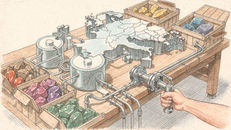
An analytical brief entitled Beijing’s next bet: Why Europeans should care about biosolutions by Janka Oertel, director of the Asia Program at the European Council on Foreign Relations (ECFR), records that Europe is losing ground in the strategic biosolutions sector. With China seeking a global leadership in this field, urgent steps and protectionism are indispensable if Europe is to retain its own leadership.
The author points outs three areas. The first one is defense and resilience, with biosolutions ranging from new materials to bacteria that detect mines and offering a prospect for greater economic resilience, breakthrough defense technology and lesser dependence on rare earths. Ms. Oertel actually suggests militarizing civilian biotechnology and creating a new axis of antagonism. The second area is biomanufacturing, presented as a green industry that can potentially create jobs. The author notes that Europe is still ahead here but its regulatory environment is slow, which threatens European leadership.
She cites the example of Beijing’s strategy that integrates bioeconomy into five-year plans of China’s economic development. China aims to be the global leader by 2035. Ms. Oertel believes it to be a direct threat to European security, and this is how Europe should perceive it.
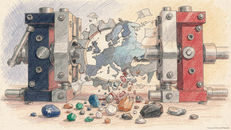
The main risk for Europe, essentially embedded in the very logic of the report, is competition being replaced by a confrontation perspective. Technological development is exclusively understood as an antagonism with China. That opens the road to lobbying the interests of the defense sector and those biotechnology companies that can count on subsidies and public contracts, but fails to guarantee the whole industry’s sustained development.
A second group of risks stems from the regulatory environment. The call for speeding up the regulatory processes, if fulfilled at any cost, is bound to weaken the safety standards. The long-term environmental and medical consequences of such haste could negate all short-term benefits.
And, finally, the European economy is in danger, should it blindly follow the U.S. anti-China course. Disruption of the production chains that have been built for years with Chinese companies and loss of access to cheap inputs constitute direct economic damage. China, in turn, is acting pragmatically, and an ideological approach could weaken rather than strengthen the EU’s position in this field.