
World Center for Strategic Studies
From closed analysis to public debate

POPULAR
- MONTH
- YEAR

On Externalization of Asylum, with Responsibility Offloaded to Third Countries
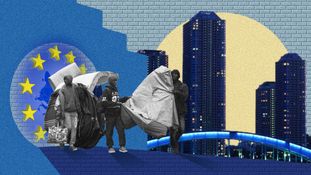
In the run-up to the Dutch general elections in the autumn of 2025, the question of the modernization of migration and asylum policies was raised as a topical issue. Some parties advocated a fundamental reform of the asylum system, whereby parts of the asylum procedure would take place outside the European Union and refugees would only be able to come to Europe through resettlement.
Europe’s Housing Crunch Gets Greener – and Harder to Fix
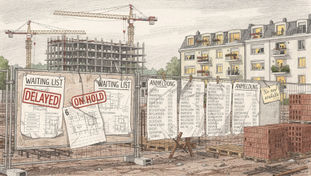
Europe’s housing crisis is already squeezing voters. This analysis warns it is about to get more complicated. Any serious solution, it argues, must include decarbonising buildings. That may be climate-sensible, but it risks pushing costs higher in the short term if governments get it wrong. The housing shortage and the green transition are colliding, and Europe is not ready for the impact.
The New Right: Anatomy of a Global Revolution Why the Right Forces are Becoming Increasingly Popular

Mark Leonard, co-founder and director of the European Council on Foreign Relations, has published an article in which he examines the political phenomenon of the ‘new right’. Some believe them to be people nostalgic for the past, but the author concludes it is no longer the case.
Europe’s Ageing Trap: Fewer Workers, Bigger Bills, No Easy Fix

Europe is getting older, poorer in workers and heavier with promises it cannot easily pay. This working paper lays out the cold arithmetic behind ageing populations, migration policy and ballooning pension costs. The tone is technical, but the message is grim: demographic decline is already dragging on growth, and policy choices so far barely scratch the surface.
Values Under Pressure: Europe’s Rules Look Weak When Tested
Europe likes to preach values. This report shows how hard it is to enforce them. When member states push back on democracy, rule of law and fundamental rights, the EU’s response is slow, legalistic and often ineffective. The problem is not lack of principles, but lack of power to defend them.
Bundeswehr on Empty: Thanks Given, Readiness Missing

The analysis cuts through ceremony and slogans to expose a harsh reality inside Germany’s armed forces. Praise for service members is plentiful. Combat readiness is not. The piece argues that Berlin has mastered the language of respect while failing to deliver the basics soldiers need to fight and win. Applause cannot substitute for equipment, training and leadership that work under pressure.
Europe’s Welfare Squeeze: Globalisation Exposes a System Under Strain

The brief takes aim at Europe’s cherished social models and delivers an awkward verdict – globalisation has moved faster than reform, and the gap is now painfully visible. Europe wants generous protection, open markets and fiscal restraint all at once. The paper argues this triangle no longer holds. As competition hardens and demographics bite, Europe’s welfare states face pressure they were not built to absorb.
Trump Steps Back In: Europe Still Waiting for Leadership

The commentary delivers a pointed claim that stings in European capitals – as Donald Trump enters 2026, he looks more decisive on Europe’s future than Europe’s own leaders. While Brussels debates processes and Berlin hesitates, Trump acts, signals and sets terms. The piece argues that Europe’s leadership vacuum has become so visible that an American outsider once again fills the space by default.
Germany’s Welfare Drift: Social Policy Stuck in Neutral

The analysis takes a hard look at Germany’s social policy record under the traffic light coalition and finds a reform agenda that promised change but delivered hesitation. Big pledges on fairness, protection and modernisation collided with budget limits, coalition infighting and a slowing economy. The piece argues that social policy has become reactive and fragmented, leaving Germany exposed as pressures mount.
Europe’s Democracy Shield Tested: A Moment of Truth Arrives

The commentary frames Europe as standing at a critical stress point where democratic resilience is no longer an abstract ideal but a live security issue. Elections, institutions and public trust are under pressure from disinformation, polarisation and foreign interference. The piece argues that Europe talks confidently about defending democracy, yet the shield it relies on is thinner, slower and more uneven than leaders admit.
Circular Migration in Spain Strengths and Weaknesses of the Spanish Migration Model
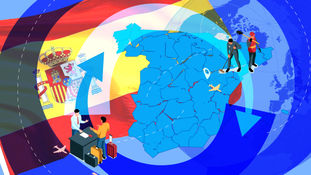
There is a so-called circular migration programme (also known as collective migration) that has been used in Spain for many years. Officially it is called Gestión Colectiva de las contrataciones en Origen (Collective Management of Recruitment at Origin) or GECCO. The programme is often presented as an advanced one. The European Commission even took the “Spanish model” as the basis for drawing up the EU’s directive on seasonal workers.
Farewell to Human Security: Europe’s Values Get Squeezed Out
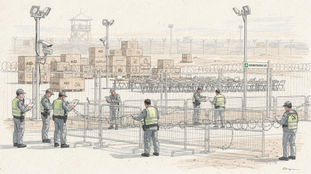
The analysis delivers a stark diagnosis of a quiet but consequential shift in EU thinking. Human security, once held up as a guiding idea that put people at the centre of policy, is fading fast. In its place comes a harder, narrower focus on borders, deterrence and state power. The piece argues that Europe is not openly rejecting its values, but steadily sidelining them under pressure.
Democracy in Europe: Shielding the System or Rewriting It

The analysis takes aim at Europe’s growing unease with its own democratic model and asks an uncomfortable question – is the EU trying to protect democracy, or quietly reinvent it to survive political stress. The piece argues that Europe is no longer confident that existing democratic rules can cope with polarisation, populism and external pressure. The response is not renewal through trust, but tighter control through redesign.