World Center for Strategic Studies
From closed analysis to public debate

- MONTH
- YEAR

Germany, China, and the End of the Comfort Era
The analysis argues that Germany’s relationship with China marks the quiet end of the post-Cold War world Berlin once thrived in. The old model – trade first, politics later, risks ignored – no longer works. What replaces it is confusion, hesitation and exposed dependence. The piece shows how Germany is struggling to adjust to a world where economic ties are no longer neutral and China is no longer just a market.
At its core, the article says Germany built its prosperity on assumptions that have collapsed. Cheap energy, open globalisation and predictable geopolitics are gone. China, once a growth partner, is now a systemic rival, but Germany’s economy remains deeply tied to it. Berlin knows the danger, yet cannot break the habit.
The post-Wall illusion shatters
Germany’s China policy was shaped by the belief that trade would soften politics. The analysis shows how this mindset survived long after evidence turned against it, delaying adjustment until dependence was entrenched.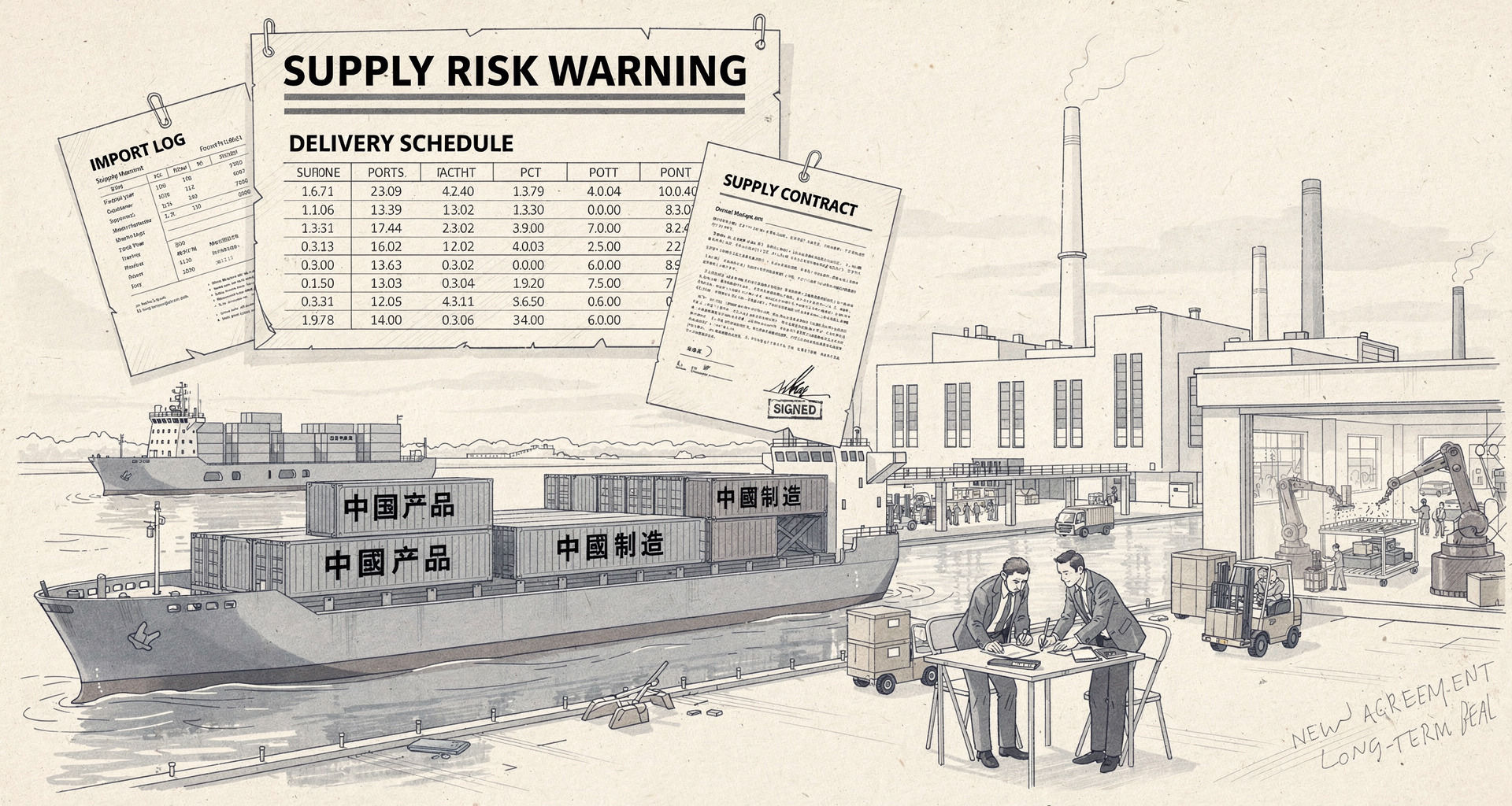
Business ties tighten the trap
German industry remains heavily exposed to China’s market and supply chains. The paper highlights how corporate pressure limits political room to manoeuvre, even as risks multiply.
De-risking in name only
Berlin adopts the language of de-risking, but action is cautious and partial. The analysis stresses that real diversification would hurt in the short term, and Germany keeps postponing that pain.
Security reality intrudes
China’s global posture and alignment with Russia force security questions Germany once avoided. The paper argues that economic pragmatism now clashes directly with strategic responsibility.
America frames the boundaries
Germany’s China choices are increasingly constrained by US expectations. The analysis frames this as a loss of autonomy – Berlin adapts to pressure from both Washington and Beijing.
Political culture lags reality
Consensus politics and risk aversion slow response. The paper shows how Germany’s preference for stability becomes a liability in a world demanding faster choices.
The stark truth: The old world is over
Germany is adjusting late to a system that has already changed.
If Berlin continues to hedge instead of choosing, it will lose control by default. The post-Wall era that made Germany rich is gone. What replaces it will be harsher, more political and far less forgiving – whether Germany is ready or not.