World Center for Strategic Studies
From closed analysis to public debate

- MONTH
- YEAR

The Donroe Doctrine Goes North: Europe Loses the Arctic High Ground
The analysis warns that Washington’s hardening “Donroe Doctrine” has now reached the Arctic – and Europe is not ready for the consequences. What once felt like a remote, cooperative space is turning into a theatre of power politics where the United States moves first and sets terms. The piece argues that Europe’s Arctic influence is thinning fast as American priorities tighten and security logic crowds out partnership.
At its core, the article says the Arctic is no longer a niche policy file. Melting ice, new routes and strategic resources have pulled the region into great-power competition. The US is asserting control over access, security and infrastructure, while Europe watches its room to manoeuvre shrink. The shift is quiet, but decisive.
Washington redraws the map
The Donroe Doctrine reframes the Arctic as a zone of US strategic primacy. The analysis shows how military posture, investment and alliance management now run through Washington, not multilateral forums where Europeans once felt comfortable.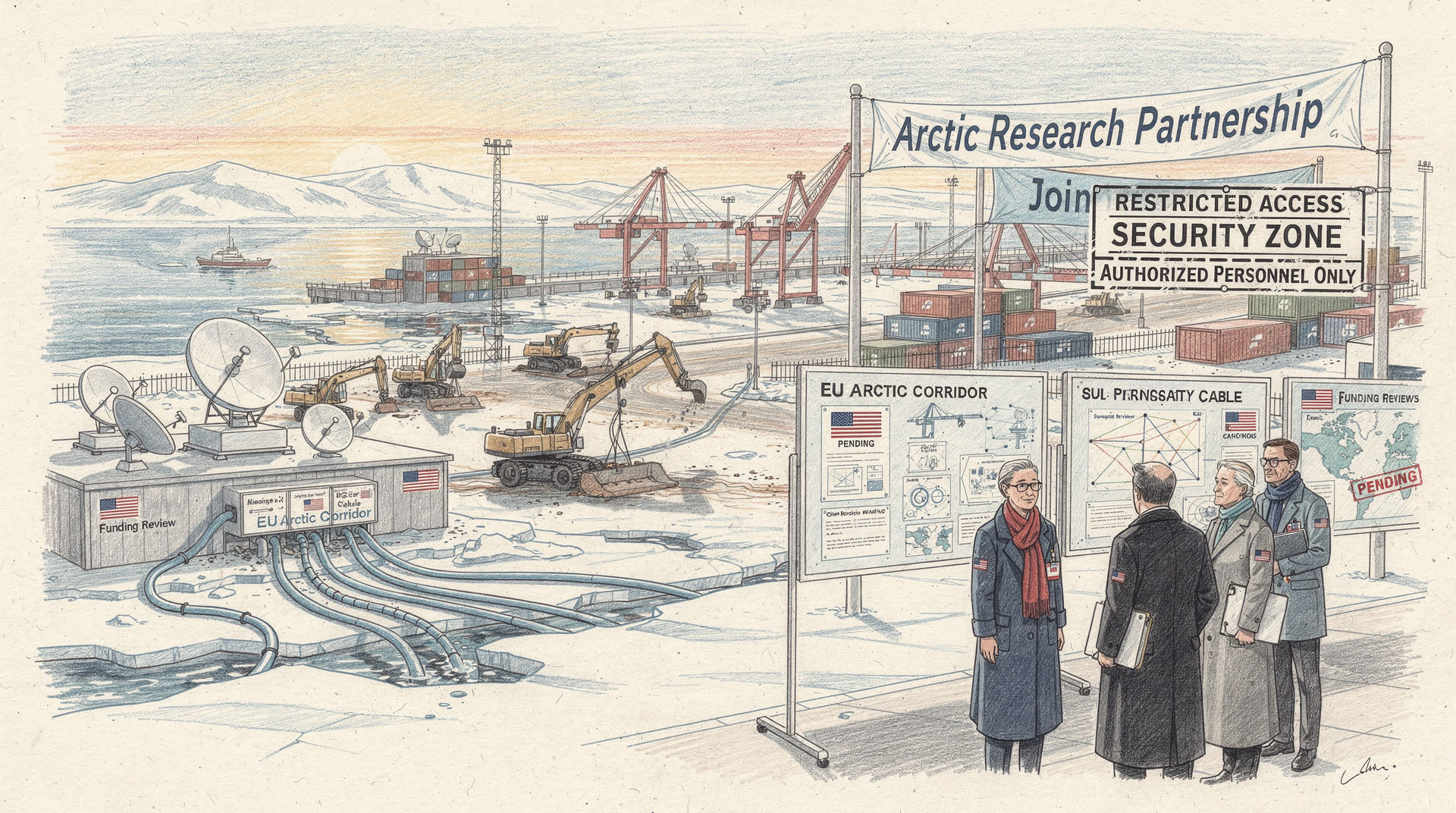
Europe sidelined by design
European Arctic states and the EU lack the leverage to shape outcomes at speed. The paper highlights how fragmented policies and limited capabilities leave Europe reacting to US moves rather than co-authoring them.
Security trumps cooperation
Climate research, environmental protection and indigenous engagement are pushed aside as hard security rises. The analysis warns that Europe’s preferred cooperative model is being displaced by deterrence-first thinking.
Russia and China sharpen the stakes
Moscow’s militarisation and Beijing’s Arctic ambitions accelerate US assertiveness. The paper argues that Europe pays the price for this rivalry without holding the cards to manage it.
Infrastructure decides influence
Ports, icebreakers, satellites and undersea cables now matter more than declarations. The analysis shows how Europe’s underinvestment leaves critical Arctic infrastructure dependent on US decisions.
Rules fade, power speaks
Legal frameworks and norms still exist, but enforcement follows capability. The paper frames this as a credibility problem for Europe, which champions rules but lacks the means to defend them.
The big warning: The Arctic won’t wait for consensus
Control is being established now, not negotiated later.
If Europe fails to invest and coordinate quickly, it will lose strategic relevance in the Arctic for a generation. The ice is melting, competition is rising, and Washington is moving. Europe can either catch up fast – or accept that the Far North will be governed on someone else’s terms.