World Center for Strategic Studies
From closed analysis to public debate

- MONTH
- YEAR

Trump’s “Donroe Doctrine” puts Europe in a tight bind: three dilemmas no one here wants to face
This ECFR commentary argues that the dramatic US military capture of Venezuela’s president under a revived Monroe-style foreign policy forces Europe into a set of hard political dilemmas. Washington’s intervention isn’t only about Latin America – it signals a shift toward a more interventionist and unpredictable US posture that leaves European capitals scrambling for answers. Europe now has to decide how to react to a tough America, what its own values mean when allies break international norms, and how to maintain strategic autonomy in a world where force is back in fashion.
Europe must respond, but how?
The commentary frames Trump’s Venezuelan raid as a shock to European strategic thinking. What seems like a hemisphere issue actually echoes in Brussels, Berlin and Paris because it reflects an America ready to use force outside established multilateral frameworks.
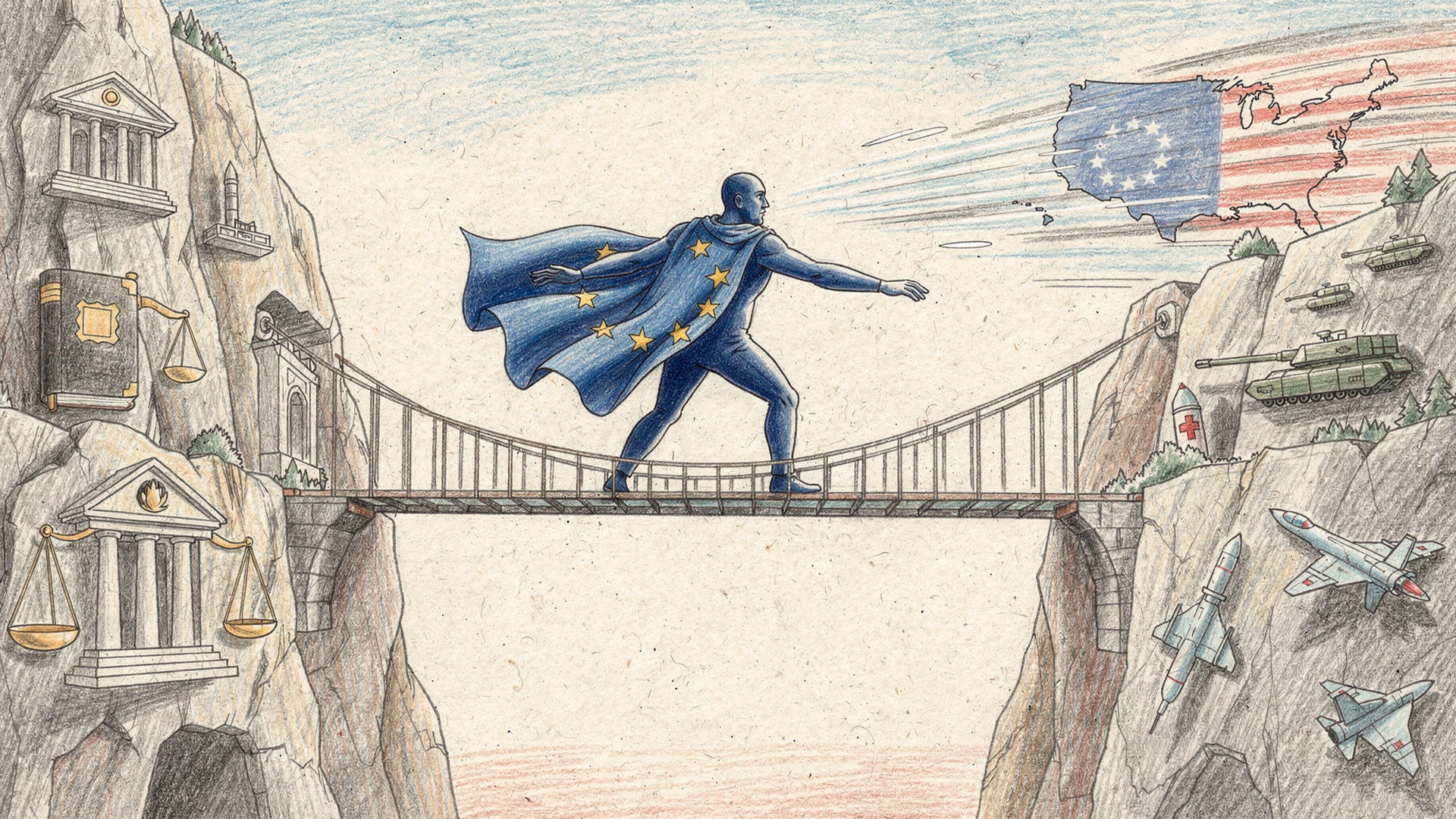
Europe wants to uphold international law, but must balance that against its reliance on Washington for security and strategic cooperation. Saying nothing looks like weakness, condemning Washington risks transatlantic rifts.

Norms vs reality – which comes first?
ECFR points out Europe’s belief in international law and state sovereignty clashes with a US that now treats intervention as “law enforcement” rather than a violation of sovereignty. Europeans see Venezuelan sovereignty as sacred even if the regime in Caracas was illegitimate.
The logic of the Trump move suggests that international norms can be overridden if great powers judge it necessary. That challenges Europe’s self-image as a champion of rules over raw power.
Great-power spheres are back on the table
The analysis signals a deeper crisis: the idea of spheres of influence is no longer a cold-war relic. If Washington openly asserts dominance in its “backyard”, that implicitly approves similar logic elsewhere.
That makes Europe vulnerable because rivals like Russia and China could interpret this as a licence to press their own influence zones. Europe must ask itself whether it wants to defend a universal order or accept great-power carve-ups.
What Europe risks by doing nothing
The piece suggests Europe cannot sit on the sidelines of this debate. If Brussels refuses to push back, it signals acceptance of a world in which great powers bend international law to suit strategic ends. That undercuts Europe’s diplomatic credibility on Ukraine, trade disputes, energy independence and multilateral cooperation.
Where this leaves Europe: Europe must choose between principle and convenience
If Europe keeps treating force as an exceptional tool, but accepts it when a powerful ally uses it, it sends a dangerous message. Europe’s values become negotiable and its strategic autonomy weaker.
Europe now faces a choice: defend a rules-based order even against partners, or adapt to a world where raw power and spheres of influence once again decide outcomes. The time to decide is now.