World Center for Strategic Studies
From closed analysis to public debate

- MONTH
- YEAR

Labor of Migrant Workers in Agriculture The Cases of Five Entirely Different Countries
Under a European Union grant, Blanca Garcés, senior research fellow at the Barcelona Center for International Affairs (CIDOB), has prepared an extensive report about the living and working conditions of agricultural migrant workers in four European countries (Italy, Poland, Spain, and the Netherlands) and one African country (Morocco).
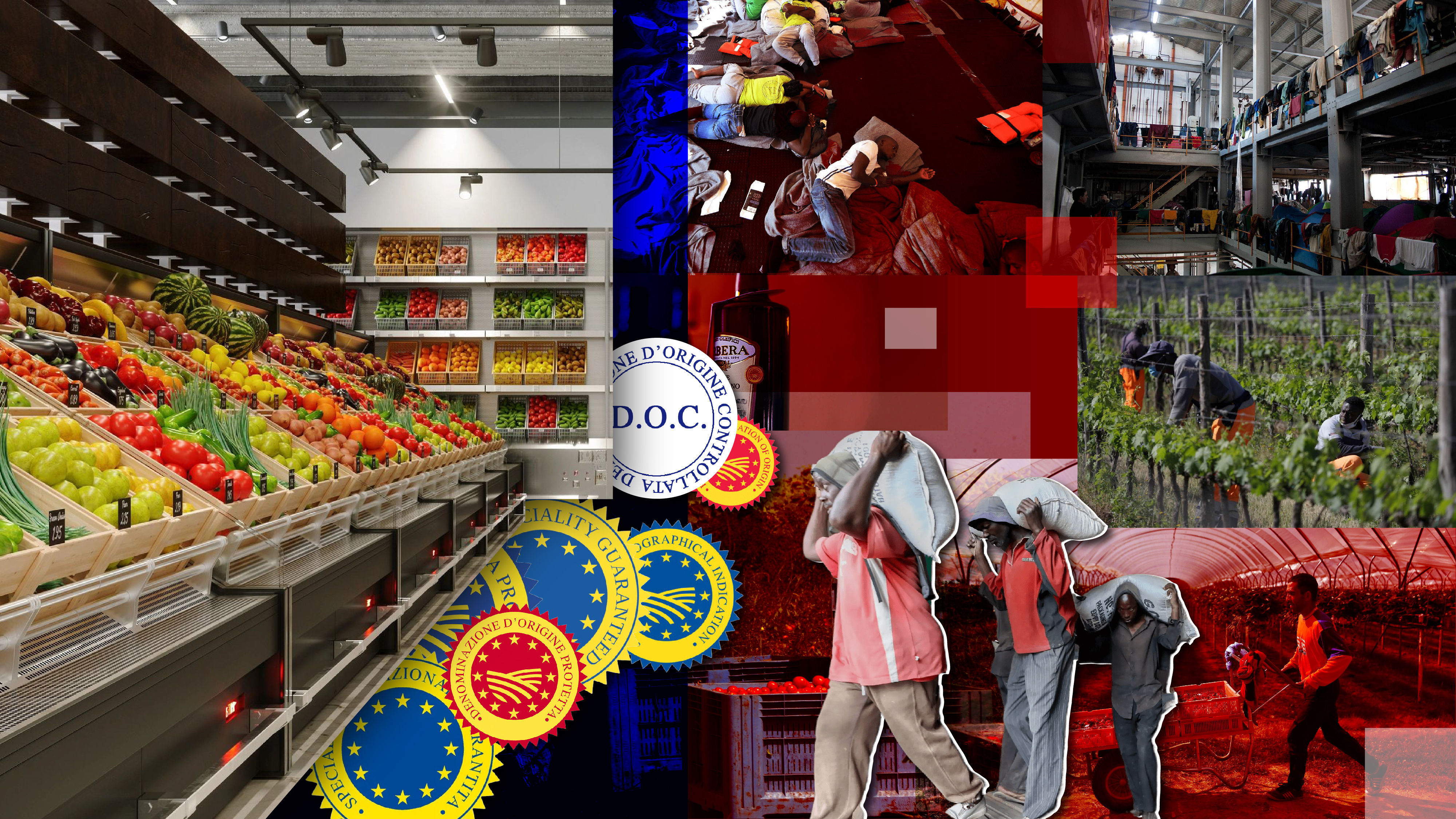
Looking ahead we can summarize that, despite some visible advantages, the said countries’ agricultural sector has generally nothing good to offer migrant workers. At all places, their existence is generally joyless and their future, foggy.
In the Netherlands, most labor migrants are EU citizens and thus legal residents. They usually work via temporary employment agencies or through complicated legal schemes that include a number of contractual parties.
Most Ukrainian workers in the Masovian Voivodeship of Poland may enter the country visa-free and stay here for 90 days within a 180-day period without any need to register and, consequently, with a legalized residence status. Those wishing to work need a working visa.
The number of contractual workers in the agricultural sector of Almeria in Spain shows that most are lawful residents or labor migrants. Yet the presence of a considerable number of illegal immigrants in the area also suggests that undeclared employment is no exception, either.
In Saluzzo, Italy, there are labor migrants with long-term residence permits (particularly Moroccans and Albanians who have been living in Italy for a long time). Yet some are working here in a precarious legal status, e.g. asylum-seekers, persons granted international protection, or holders of a humanitarian residence permit (but possibly no employment permit).
In all the five cases, migrant workers’ incomes are rather low and precarious. In Poland, the rate for migrant workers is technically equivalent to the minimum hourly wage of EUR 5.6 per hour. In Italy, it rises to EUR 6.5 under ordinary contracts – meaning that a worker can earn some EUR 1,000 in a month with 20 working days. In Spain, the official wage is EUR 7.96 an hour, and in Morocco, the equivalent of EUR 8.7 daily.
In the Netherlands, most mobile workers from the EU earn the Dutch minimum wage of EUR 14.40. Notably, the living costs in the Netherlands are considerably higher than in other countries under review.
In practice, their wages may be even lower. Many employers simply understate the number of days or overtime hours worked. Another reason is that workers may bear unexpected additional costs. For instance, in the Netherlands workers often live in ‘summer parks’ where they are charged more than EUR 500 a month for a bed in a common room.
To sum up, despite varying working conditions, agricultural migrant workers’ living standards remain low in the countries under review, and their environment is extremely marginalized. They are essentially working in a slavery-like situation.