World Center for Strategic Studies
From closed analysis to public debate

- MONTH
- YEAR

Europe Without a Plan: Strategic Globalisation Exposes the EU
The world has changed, and Europe is badly behind the curve.
This RAND assessment argues that globalisation is no longer about free trade and open flows, but about power, leverage and control – and the EU is unprepared.
Supply chains are being weaponised, markets are politicised and states now trade security for efficiency.
Europe, by contrast, still behaves as if rules alone can protect it.
The result is a bloc exposed to shocks it cannot shape and pressures it struggles to resist.
Globalisation turns hostile
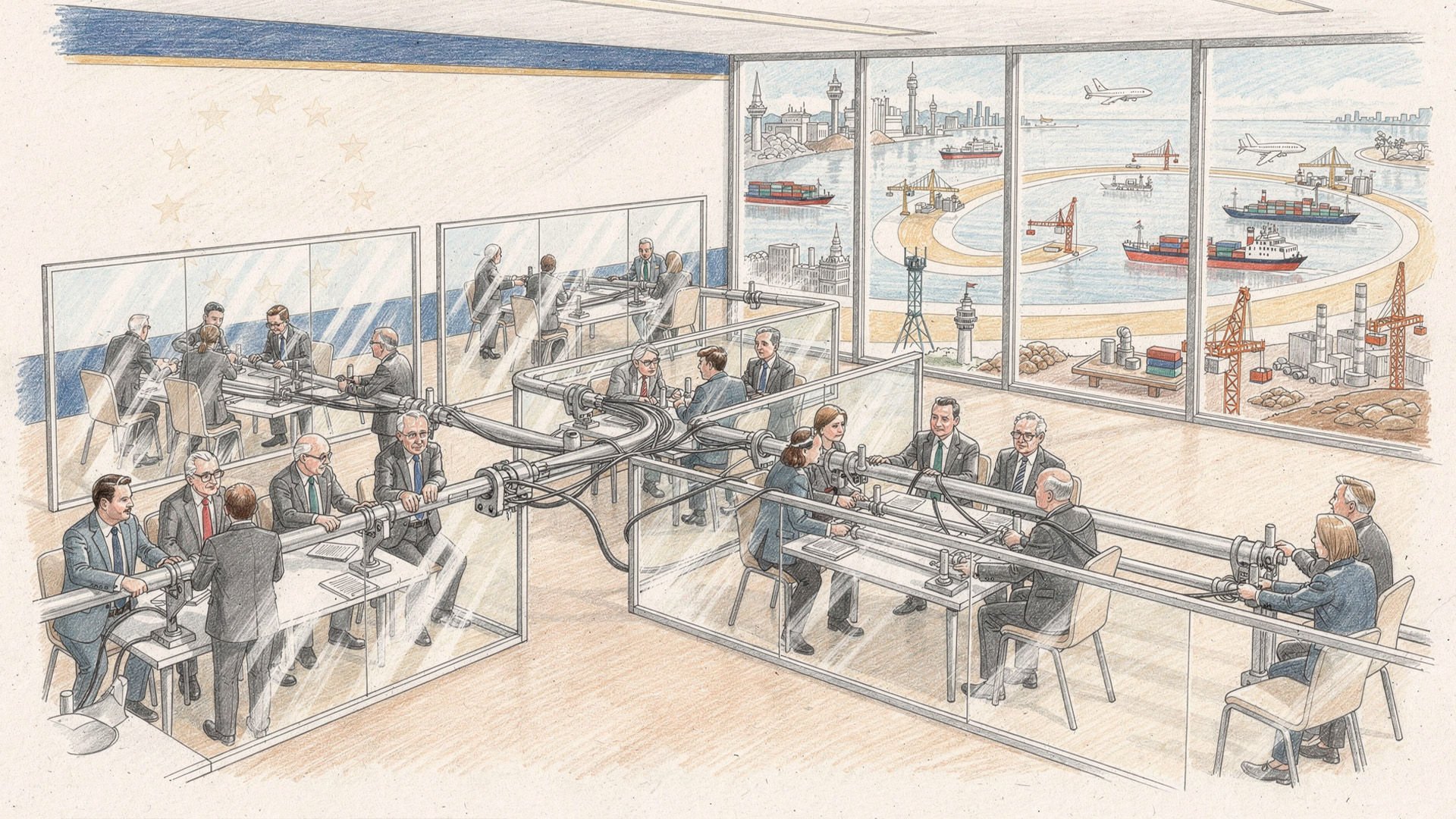
The paper lays out how economic ties are now used as tools of coercion. Access to markets, finance, technology and raw materials is increasingly conditional. The old assumption that interdependence creates stability no longer holds, and Europe is discovering this too late.
Rules without muscle
The EU remains confident in regulation, standards and legal frameworks. But in a world of strategic competition, rules only matter if they are backed by power. Europe can write norms, but it cannot always enforce them when partners or rivals decide to ignore the rulebook.
Dependency runs deeper than admitted
Europe relies heavily on external suppliers for energy, critical minerals, advanced technologies and security guarantees. Efforts to “de-risk” are slow and fragmented. The analysis warns that partial diversification without strategic coordination leaves Europe just as vulnerable, only more expensive.
Internal divisions block strategy
Member states disagree on how far to go in using trade and investment as geopolitical tools. Some fear retaliation, others fear costs at home. This hesitation paralyses decision-making and prevents the EU from acting decisively when pressure hits.
Washington and Beijing set the pace
The US and China are already operating in a world of strategic globalisation, aligning economic policy with security goals. Europe reacts after the fact, adjusting to choices made elsewhere. That reactive posture steadily erodes influence.
Costs land at home
Strategic competition raises prices, disrupts supply chains and slows growth. Without a clear plan, Europe absorbs the costs but gains little leverage. Households, firms and governments all pay for a strategy that does not yet exist.
Where this leaves Europe: Exposed, divided, and late.
The era of comfortable interdependence is over.
Unless the EU accepts that globalisation is now a contest of power, not goodwill, it will keep suffering the downsides without shaping the rules. In a harder world, hesitation is not neutrality – it is weakness.